The Rise of Skate Documentaries: From VHS Tapes to Academy Award Nominations
How skateboarding became one of documentary cinema's most compelling subjects
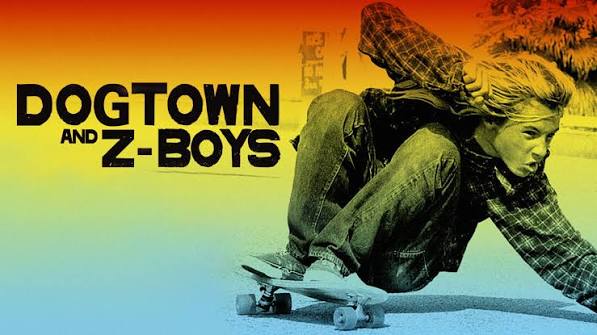
Skate documentaries went from niche VHS curiosities to legitimate cinema long before most people noticed. The moment Dogtown and Z-Boys walked out of Sundance in 2001 with two awards - the Audience Award and the Directing Award - the conversation changed permanently.
Skateboarding has produced some of the most compelling documentary filmmaking of the last 25 years, from Stacy Peralta's Dogtown and Z-Boys winning at Sundance in 2001 to Bing Liu's Minding the Gap earning an Academy Award nomination in 2019. These films didn't just document skateboarding - they used it as a lens to examine identity, class, trauma, and belonging. Skate culture turned out to have stories worth telling on the biggest stages.
How Did Skate Documentaries Go From VHS to Sundance?
The roots are in the skate video, not the cinema. Before anyone was making documentaries, skaters were making videos - raw, low-budget, shot by whoever had a camera. That tradition started in the 1980s when Stacy Peralta and the Powell-Peralta machine began producing the first professional skate videos. Grainy footage, hand-dubbed tapes, passed around like contraband.
Then in 1991, Spike Jonze directed Blind Video Days. Featuring Mark Gonzales, Jason Lee, and Guy Mariano, it's still considered one of the most influential skate videos ever made. It wasn't a documentary exactly - but it had a documentary's soul. Real people, real streets, something authentic bleeding through every frame.
That sensibility didn't disappear. It evolved.
What Made Dogtown and Z-Boys Such a Turning Point?
It proved the culture had history worth preserving - and audiences outside skating who wanted to understand it. Directed by Stacy Peralta and narrated by Sean Penn, Dogtown and Z-Boys debuted at the 2001 Sundance Film Festival and walked away with both the Audience Award and the Directing Award. That's not a consolation prize circuit. That's one of the most competitive documentary fields in the world.
It went on to win the Independent Spirit Award for Best Documentary. By August 2002 it had grossed over $1.29 million at the US box office - real numbers for a documentary about skateboarding from Southern California in the 1970s. Peralta later said it sold over one million DVDs and more than 700,000 VHS copies. A lot of kids found out about the Zephyr team through that film. I was already deep in the history, but I remember handing copies to people who'd never touched a board and watching them get it.
The film worked because it wasn't just about skating. It was about a community, a place, a moment in time that couldn't be recreated. Santa Monica and Venice in that era. Kids with nothing who built something.
Is Bones Brigade: An Autobiography the Most Important Skate Doc Ever Made?
It makes a strong argument. Stacy Peralta returned to directing with Bones Brigade: An Autobiography, telling the story of the Powell-Peralta team - Tony Hawk, Steve Caballero, Tommy Guerrero, Lance Mountain, Rodney Mullen, and Mike McGill. Red Bull called it "arguably the most important documentary in the history of skateboarding." That's a big call, but it's not a stupid one.
What the film understood is that the Bones Brigade weren't just riders. They were archetypes. Kids who became icons. Watching Rodney Mullen talk about his father, or Hawk reflect on what it felt like to be that kid who couldn't land the 900 - that's not sports content. That's character study. It works on people who've never owned a board.
How Did Minding the Gap Change What Skate Docs Could Be?
Bing Liu's Minding the Gap is the one that shifted the ceiling entirely. Released in 2018, compiled from over 12 years of footage, it follows Liu and his friends growing up in Rockford, Illinois. Skateboarding is the thread, but the film is really about domestic violence, masculinity, and what it costs to grow up without safety.
It won the U.S. Documentary Special Jury Award for Breakthrough Filmmaking at the 2018 Sundance Film Festival. It won a Peabody Award. The New York Film Critics Circle named it Best Non-Fiction Film of the year. Then it was nominated for Best Documentary Feature at the 91st Academy Awards.
That's an extraordinary run for any documentary. For one that grew out of skate footage, it's almost hard to believe.
What Liu proved is that the skateboard isn't the subject - it's the access point. These kids trusted him because he was one of them, because he'd been filming them since they were teenagers. The camera was always around. That intimacy couldn't have been manufactured.
Why Does Skateboarding Produce Such Good Documentary Subjects?
Skaters document themselves compulsively. Every session, every trip, every trick attempt. The culture has been filming itself since before most art forms had that habit. By the time a serious filmmaker picks up the thread, there's already years of raw material to work with.
There's also something about the margins. Skating has always lived outside the mainstream - even now, even after the Olympics. The people drawn to it often have complicated backgrounds, complicated relationships with authority and expectation. That makes for genuine stories. Not manufactured drama. Actual life.
The best skate documentaries understand this. They don't treat skating as spectacle. They treat skaters as people.
The Quick Version
- Dogtown and Z-Boys (2001) won two Sundance awards and the Independent Spirit Award, selling over a million DVDs and proving mainstream appetite for skate history.
- Bones Brigade: An Autobiography is considered by many to be the most important skate documentary ever made, covering Hawk, Mullen, Caballero, and the full Powell-Peralta story.
- Minding the Gap (2018) was nominated for an Academy Award after 12 years of footage - and it's really a film about trauma, not tricks.
- The skate video tradition - going back to Spike Jonze's Blind Video Days in 1991 - laid the documentary groundwork long before anyone was calling it cinema.
- The best skate docs work because they use the culture as access, not as subject matter. That's the difference between a surf film and Dogtown.
Find this useful?
Built for collectors like you.
Your collection deserves better than a spreadsheet.
Catalogue every board, log what you paid, and connect with collectors who get it. Your values are always private.