Santa Cruz Skateboards: 50 Years, One Hand, and the Most Recognisable Graphic in Skating
From a California garage in 1973 to the most recognised image in skateboarding history - how Santa Cruz built a legacy that outlasted almost everyone.
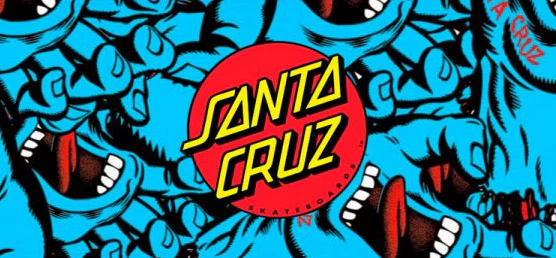
Santa Cruz Skateboards has been running continuously since 1973, making it one of the longest-operating skateboard companies on the planet. The Screaming Hand graphic, created by Jim Phillips in 1985, is the single most recognised image in skateboarding history - full stop.
Santa Cruz Skateboards was founded in Santa Cruz, California in 1973 by Richard Novak, Doug Haut, and Jay Shuirman under NHS Inc. The Screaming Hand, designed by in-house artist Jim Phillips in 1985, became the defining visual symbol of 1980s skateboarding and remains in active production today. Fifty-plus years in, Santa Cruz is still skating, still printing that hand, and still relevant.
What Is Santa Cruz Skateboards and Where Did It Come From?
Santa Cruz Skateboards was born in 1973 in Santa Cruz, California, founded by Richard Novak, Doug Haut, and Jay Shuirman. The company name NHS comes directly from their surnames. They started at a time when skateboarding was still figuring out what it wanted to be - clay wheels, flat boards, sidewalk surfing.
NHS wasn't just a skate brand. Through the early-to-mid 1970s, they were helping push urethane wheel technology that genuinely changed what was possible on a board. Harder slides, more grip when you wanted it, actual control. The hardware side and the board side grew up together.
By 1975, Jim Phillips had come on board as the in-house graphic artist. That hire changed everything. Phillips didn't just draw logos. He built a visual language.
Who Designed the Screaming Hand and Why Does It Matter?
Jim Phillips created the Screaming Hand in 1985, and it first appeared on a 10-inch Santa Cruz deck. It matters because no single image in skateboarding has been reproduced more widely, lasted longer, or crossed over into mainstream culture so completely.
Phillips had been developing what collectors now call his "eyeball graphics" style - visceral, distorted, a little bit horrifying, completely unforgettable. The Screaming Hand landed right in the middle of that output and just hit different. There's no better way to put it.
I remember seeing that graphic on stickers all over Melbourne in the late '80s. It was everywhere - school bags, bus stops, the back of toilet doors at the local pool. You didn't have to skate to know what it was.
The hand has since appeared on thousands of products. Decks, t-shirts, shoes, hats, accessories. Forty-plus years of continuous production and it still doesn't look tired.
How Did Santa Cruz Build One of Skateboarding's Greatest Teams?
Through the 1980s, Santa Cruz put together a roster that reads like a hall of fame induction list. Steve Caballero, Jeff Grosso, Natas Kaupas, Jason Jessee. Each of them brought something the team needed.
Caballero dominated vert skating and gave the brand credibility in pools and ramps during skateboarding's late-80s mainstream peak. Grosso was rawer, more counterculture, the kind of skater who drew kids who didn't fit neatly into anything.
Natas Kaupas was the one who pushed Santa Cruz into street skating's future. By 1989, Natas was doing things on street that people were still trying to decode years later. Skating on top of fire hydrants. Wallrides. A kind of skating that felt like it was coming from somewhere completely new.
Santa Cruz didn't just sponsor pros. They built identities around them, and Jim Phillips' artwork was the visual thread connecting all of it.
What Happened to Santa Cruz After the Late-80s Boom Ended?
The skateboarding industry contracted hard around 1990. Companies that had been printing money suddenly weren't. Santa Cruz and NHS restructured their team and product lines to survive.
They survived. That's actually the key point.
A lot of companies from that era didn't make it. NHS had diversified enough - Independent Trucks, eventually Creature Skateboards, Bronson Bearings, Mob Grip all sit under the NHS umbrella now - that the whole operation could weather the drop in demand. Santa Cruz kept making boards through the lean years when other 1980s brands either folded or got sold off and gutted.
The brand came back into broader relevance as nostalgia for 1980s skating started building through the late 1990s and into the 2000s.
What Is the Screaming Hand Worth to Collectors Today?
Original 1985-era Screaming Hand decks are genuinely hard to find in collectable condition. Most got skated. That's what they were for.
The original deck retailed for around $30-$40 in the mid-1980s. Today, unridden examples from that era in clean condition can command significantly more from serious collectors, though values vary a lot based on provenance and graphics integrity.
Santa Cruz has run reissue programmes to meet collector demand. The 2025 limited reissue tied to the Screaming Hand's 40th anniversary was one of the more significant recent releases - though it's worth separating those reissues from original production pieces when you're buying.
| Board | Year | Original Price | Current Value (AUD est.) | Condition |
|---|---|---|---|---|
| Screaming Hand 10" Original | 1985 | ~$35 USD | $800 - $2,500+ | NOS/Unridden |
| Screaming Hand 10" Original | 1985 | ~$35 USD | $200 - $600 | Used, graphics intact |
| Screaming Hand 40th Reissue | 2025 | ~$100 USD | $120 - $200 | New |
| Natas Kaupas Pro Model (1989 era) | 1989 | ~$40 USD | $400 - $1,200 | NOS/Unridden |
| Steve Caballero Santa Cruz (1986 era) | 1986 | ~$40 USD | $500 - $1,500 | NOS/Unridden |
Values are estimates based on recent collector market activity and are not guaranteed. Condition is everything with vintage decks.
How Has the Phillips Family Legacy Continued at Santa Cruz?
Jim Phillips' son, Jimbo Phillips, started contributing artwork to Santa Cruz from 1999 onward. The family legacy is now well over four decades of continuous creative output for the same brand.
That's unusual in any industry, let alone skateboarding. Jimbo has his own distinct style while clearly carrying the DNA of his father's work. The eyeball imagery, the colour intensity, the slightly unhinged energy. It's recognisably connected without being a copy.
Jim Phillips himself is considered one of the most influential commercial artists skateboarding has ever produced. His work defined what a skate graphic could be at the exact moment the industry was figuring that out.
What Does 50-Plus Years Actually Mean for a Skate Brand?
It means Santa Cruz has now operated longer than most skaters have been alive. Founded in 1973, celebrating 50 years in 2023, and still going in 2026 with new product, active pros, and the Screaming Hand still on the catalogue.
Very few original skateboarding companies from the 1970s are still independent and operating under their original identity. Santa Cruz is one of them.
NHS Inc. keeping the company in Santa Cruz, California, for its entire existence matters too. The brand isn't just named after a place. It's still there.
The Quick Version
- Santa Cruz Skateboards was founded in 1973 in Santa Cruz, California by Richard Novak, Doug Haut, and Jay Shuirman - NHS stands for their surnames.
- The Screaming Hand was designed by Jim Phillips in 1985 and first appeared on a 10-inch deck retailing for around $30-$40 USD. Original unridden examples now fetch $800-$2,500+ AUD.
- Jim Phillips joined NHS as in-house artist in 1975 and built the visual identity that defined 1980s skateboarding. His son Jimbo has continued that work from 1999 onward.
- Santa Cruz's 1980s team - Caballero, Grosso, Natas Kaupas, Jessee - helped the brand lead both vert and street skating during skateboarding's biggest mainstream period.
- NHS's diversification into Independent Trucks, Creature, Bronson, and Mob Grip helped Santa Cruz survive the 1990 industry collapse that killed many of its contemporaries.
Frequently Asked Questions
When was Santa Cruz Skateboards founded? Santa Cruz Skateboards was founded in 1973 by Richard Novak, Doug Haut, and Jay Shuirman in Santa Cruz, California. The company operates under NHS Inc., named after the founders' initials. It has been based in Santa Cruz for its entire existence.
Who designed the Screaming Hand? Jim Phillips created the Screaming Hand in 1985. Phillips had been the in-house graphic artist for NHS Inc. since 1975 and developed a signature style built around visceral, distorted imagery. The Screaming Hand first appeared on a 10-inch Santa Cruz deck and has been in continuous production in various forms ever since.
How much is an original Screaming Hand deck worth? An original 1985 Screaming Hand deck in unridden condition can fetch anywhere from $800 to over $2,500 AUD depending on condition and provenance. Skated examples with intact graphics typically sit in the $200-$600 range. Reissue decks from anniversary programmes are worth considerably less as collector pieces but are much easier to find.
What other brands does NHS Inc. own? NHS Inc. owns several major skateboarding brands alongside Santa Cruz. These include Independent Trucks, Creature Skateboards, Bronson Bearings, and Mob Grip. This diversification across hardware and softgoods helped NHS weather the skateboarding market collapse of the early 1990s.
Who were Santa Cruz's most famous pro skaters in the 1980s? Steve Caballero, Jeff Grosso, Natas Kaupas, and Jason Jessee were among the most prominent Santa Cruz pros of the 1980s. Natas Kaupas in particular is credited with helping push Santa Cruz into the street skating era with his technically ahead-of-its-time skating from around 1989. Caballero gave the brand its vert credibility.
Is Jim Phillips still involved with Santa Cruz? Jim Phillips' son Jimbo Phillips has been creating artwork for Santa Cruz since 1999, continuing the family creative legacy. Jim Phillips himself is widely recognised as one of the most significant artists in skateboarding history. The Phillips family has now been associated with Santa Cruz for over five decades of combined output.
1 person found this useful
Built for collectors like you.
Your collection deserves better than a spreadsheet.
Catalogue every board, log what you paid, and connect with collectors who get it. Your values are always private.