The First Australian Skate Shops: Where It All Started
From surf shop sidelines to standalone scenes - how Australian skate retail grew up between 1975 and the early 1990s.
Dedicated skate shops in Australia first appeared around 1975, breaking away from surf shops to serve a scene that had been quietly building since the late 1960s. What happened over the next fifteen years shaped how an entire generation of Australian skaters got their gear, their culture, and their identity.
The first dedicated Australian skateboard retailers emerged in Sydney and Melbourne around 1975, coinciding with the global boom that ran from roughly 1975 to 1977. Many closed when that boom collapsed, but the shops that survived or opened in the second wave of the early 1980s became the backbone of Australian skate culture. These were the spots where VHS skate videos circulated, where Powell Peralta decks first landed, and where lasting scenes took root.
Where Did Australia's First Skate Shops Actually Come From?
They came from surf shops. That's the honest answer. Skateboarding arrived in Australian surf culture in the early 1960s - clay-wheeled boards imported from the US started showing up in surf shops around 1963 to 1965. They were a novelty. Something to do when the surf was flat.
Urethane wheels changed everything. When they reached Australia around 1973 to 1974, the whole feel of skating shifted and surf shop owners noticed. Floor space that had been dedicated to wax and fins started making room for decks and trucks. Gordon and Smith, Sims, and Tracker Trucks were among the first American brands making it onto Australian shelves.
The first standalone skateboard-only retail spaces; proper skate shops, not surf shops with a skate section, started appearing in 1975. Sydney and Melbourne first, then Brisbane and Perth by 1976.
What Were the Earliest Dedicated Skate Shops in Australia?
Skateboard City in Sydney is probably the most frequently cited name when you talk to people who were around in that era. Operating in the mid-1970s, it represents exactly the kind of dedicated skate retail that defined the first boom. Not a surf shop with boards in the corner. An actual skate shop.
The prices from that period are wild to look at now. A deck retailed for roughly AUD 15 to 30. A complete setup would set you back AUD 25 to 60. For context, that wasn't cheap in 1976 - but the demand was there.
Peak boom hit in 1976. Shops were opening across every major Australian city. Then, right on schedule with the global collapse, it all fell apart.
Why Did the First Wave of Australian Skate Retail Collapse?
By 1977 to 1978, the first skateboarding bust had wiped out most of what had been built. The global decline hit Australian shops hard. Most of the dedicated skate retailers either closed entirely or retreated back to surf-only retail. The boards that had been flying off shelves sat unsold. It was brutal.
A handful of surf shops quietly restocked skate gear around 1980, servicing a small but committed group of skaters who hadn't walked away. The scene didn't die - it just went underground. Small crews kept skating. The knowledge passed between people, not shops.
How Did the Second Wave of Skate Shops Change Things?
The second wave came around 1982 to 1983, and it was different. This wasn't a surf industry side project. It was proper skate retail built by people who actually skated.
Brisbane's early 1980s scene is a good example - the Ramp Raiders skate crew were tied to the independent shop culture developing there. Scenes like that weren't just buying gear, they were building community around specific retail spaces.
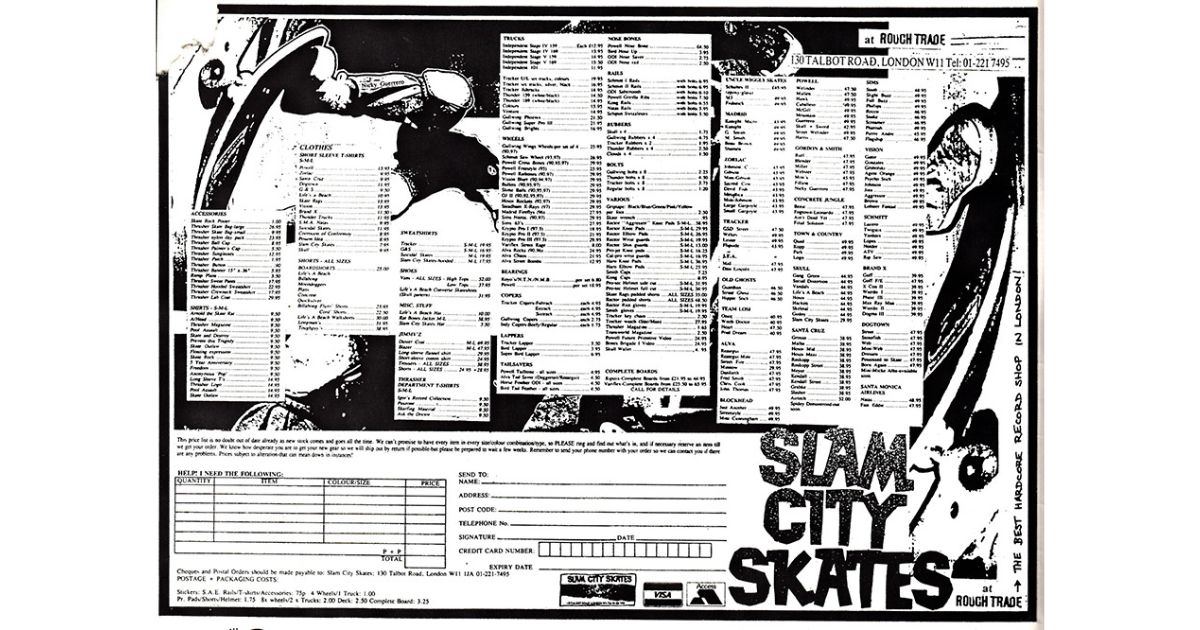
Melbourne's scene produced Slam City Skates, which traces its roots to the early 1980s and became one of the longest-running Australian skate shops. That kind of longevity doesn't happen by accident. It happens because the shop is genuinely embedded in the culture around it.
How Did VHS Change What Australian Skate Shops Stocked?
By 1985 to 1986, Powell Peralta Bones Brigade product was coming into Australian shops heavily. The reason was simple: VHS tapes. Skate videos were circulating, kids were watching them obsessively, and they wanted exactly what they'd seen on screen.
Decks that had retailed for AUD 15 in the 1970s were now AUD 50 to 80 for a Powell Peralta, Santa Cruz, or Vision board. The market had matured and so had the price points. Australian shops were importing direct, working around the surf industry importers who had controlled that pipeline in the earlier years.
By 1988 to 1989, a proper network of independent Australian skate shops had built informal distribution relationships with US brands. That was a real shift in power. The surf industry no longer gatekept what gear Australian skaters could access.
| Era | Typical Deck Price (AUD) | Complete Setup (AUD) | Key Brands Available |
|---|---|---|---|
| 1975-1977 | $15-30 | $25-60 | Gordon and Smith, Sims |
| 1982-1984 | $25-45 | $40-80 | Sims, Tracker, early Vision |
| 1985-1987 | $50-80 | $80-140 | Powell Peralta, Santa Cruz, Vision |
| 1988-1991 | $60-100 | $100-180 | Full US catalogue access |
What Was the Legacy of These Early Shops?
Disposable Skateboards in Sydney emerged as a key retail and distribution hub in the late 1980s and early 1990s, representing the matured version of what had started fifteen years earlier in those first surf shop spin-offs. The street skating explosion of 1991 to 1992 pushed new shops into suburban areas for the first time - the scene had grown beyond the cities.
The shops that survived the 1977 bust, and the ones that built something real in the second wave, did something beyond selling boards. They held scenes together. They were where you heard about spots, where videos got passed around, where you found out someone from the US was coming to skate.
That's not something you can replicate online. And it started in a surf shop in Sydney sometime around 1975.
The Quick Version
- The first dedicated Australian skate shops appeared around 1975, splitting off from the surf shops that had been stocking boards since the early 1960s.
- The first boom collapsed hard in 1977 to 1978, wiping out most early shops - the same global bust that hit everywhere else hit Australia just as badly.
- The second wave from 1982 to 1983 was different - built by skaters, not surf industry opportunists, and it produced shops with genuine staying power.
- VHS skate videos drove demand from 1985 onward, pushing shops to import Powell Peralta, Santa Cruz, and Vision directly rather than relying on surf industry gatekeepers.
- By the late 1980s, Australian shops had built their own direct relationships with US brands - the surf industry's stranglehold on skate distribution was finished.
Frequently Asked Questions
What was the first dedicated skate shop in Australia? Skateboard City in Sydney is one of the most frequently cited early dedicated skate retailers, operating in the mid-1970s during the first skateboarding boom. Standalone skate shops - separate from surf shops - first began appearing in Sydney and Melbourne around 1975.
Why did Australian skate shops close in the late 1970s? The global skateboarding bust of 1977 to 1978 hit Australia alongside everywhere else. Demand collapsed, unsold stock piled up, and most dedicated skate retailers either shut down or returned to surf-only retail. It took until around 1982 to 1983 for a genuine second wave to emerge.
How much did skateboards cost in Australian shops in the 1970s? In the mid-1970s, a deck typically retailed for AUD 15 to 30, with complete setups running AUD 25 to 60. By the mid-1980s, imported Powell Peralta and Santa Cruz decks were retailing for AUD 50 to 80 as the market matured.
What brands were stocked by early Australian skate shops? In the 1970s, the main American brands reaching Australian shelves included Gordon and Smith, Sims, and Tracker Trucks. By the mid-1980s, shops were importing Powell Peralta, Santa Cruz, and Vision as demand for those brands grew through circulating VHS skate videos.
1 person found this useful
Built for collectors like you.
Your collection deserves better than a spreadsheet.
Catalogue every board, log what you paid, and connect with collectors who get it. Your values are always private.